




 October 13, 2022
  2 min read
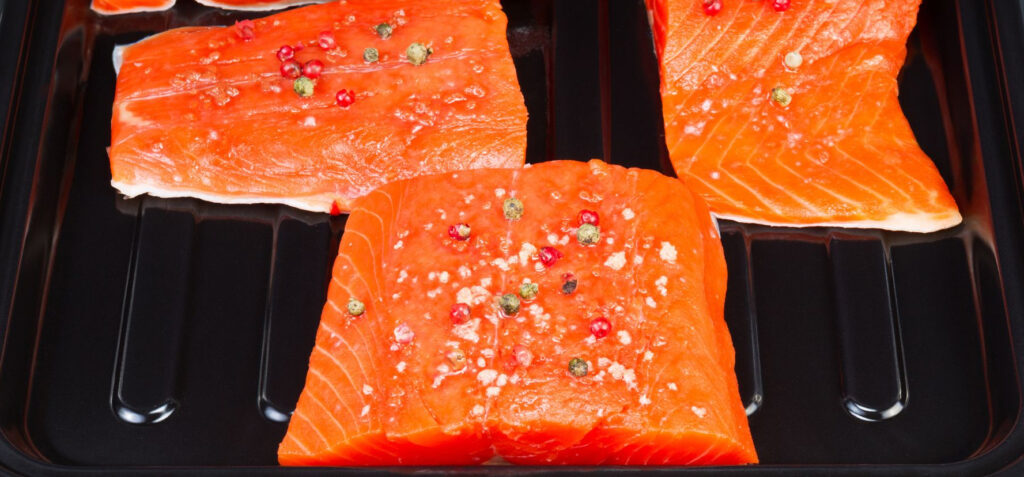
 Salmon can be prepared in many different ways. One of them is in the comfort of your own…
 Pure Alpine Salmon
 Back
Back
 September 11, 2025
3 min read
September 11, 2025
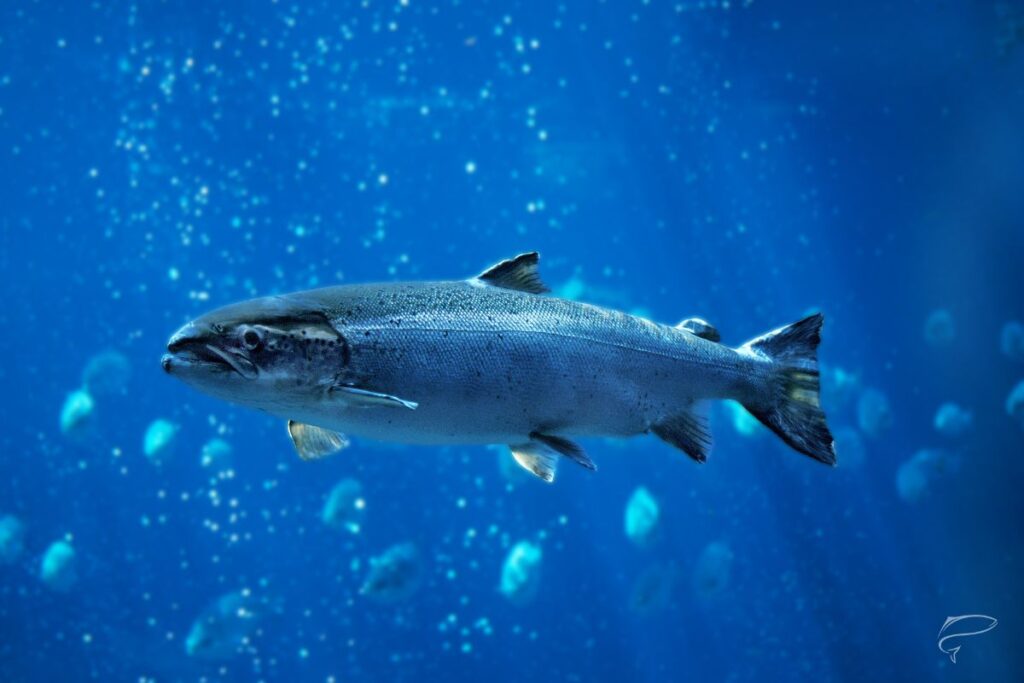
3 min read Not all salmon are the same. SWISS LACHS farms Atlantic salmon. But how many salmon species are there? What do salmon eat? And what are the biggest threats to wild salmon? In this article, we answer the most frequently asked questions.
There are 9 different salmon species in total. The best-known species include king salmon, sockeye salmon, pink salmon, silver salmon and Atlantic salmon, which is the species farmed by SWISS LACHS. Most salmon species live in the temperate to subarctic regions of the northern hemisphere.
Salmon larvae first feed on their yolk sac. Later, salmon eat insects, small crustaceans and both small and larger fish. You can learn more about what SWISS LACHS fish feed is made of in this YouTube video:
Watch the video
At their birthplace in freshwater, salmon have only limited food. That is why they migrate to the salty water of the sea, where they find better conditions for growing and reaching sexual maturity. Salmon spend several years in the sea until they are fully grown. To spawn, which means to reproduce, they return to the place where they were born.
Young salmon remember the chemical fingerprint of their birth river. Years later, they use this memory, together with their sense of smell and magnetic orientation, to find their way back to the exact place where they were born.
Salmon adapt through a process called osmoregulation. This process helps the salmon’s body adjust to changes in the salt level of the water. On the salmon farm, this process takes place in the brackish water tank. It is explained in detail in this video:
Watch the video
During reproduction, the female salmon uses her tail fin to dig a hollow in a gravel bed. She then lays up to 30,000 eggs in this hollow. The eggs are fertilised by the males. Afterwards, the female salmon covers the fertilised eggs with gravel again.
During their journey from the river to the sea and back again, salmon are an important food source for more than 200 animal species, including bears and birds of prey. They also help transport nutrients from the sea back into rivers and forests.
River construction, pollution, climate change and overfishing have all contributed to wild salmon being considered threatened. Sustainably farmed and locally produced salmon can help reduce pressure on wild salmon populations and support their recovery.
You can reach our experts at info@swisslachs.ch. We look forward to answering your question.

 October 13, 2022
2 min read
October 13, 2022
2 min read Salmon can be prepared in many different ways. One of them is in the comfort of your own…
 January 17, 2022
3 min read
January 17, 2022
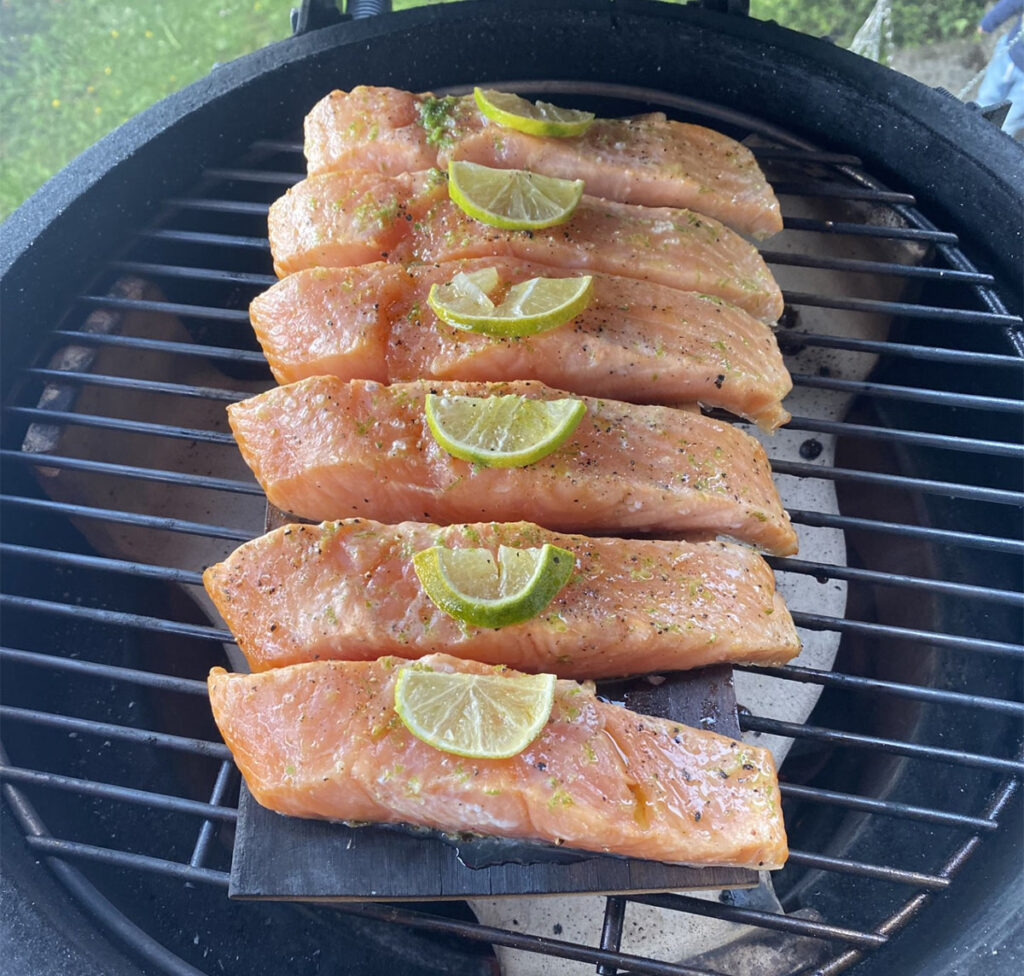
3 min read Summer has arrived and the warm temperatures are tempting you outside. We have numerous products that can be…
 September 16, 2021
3 min read
September 16, 2021
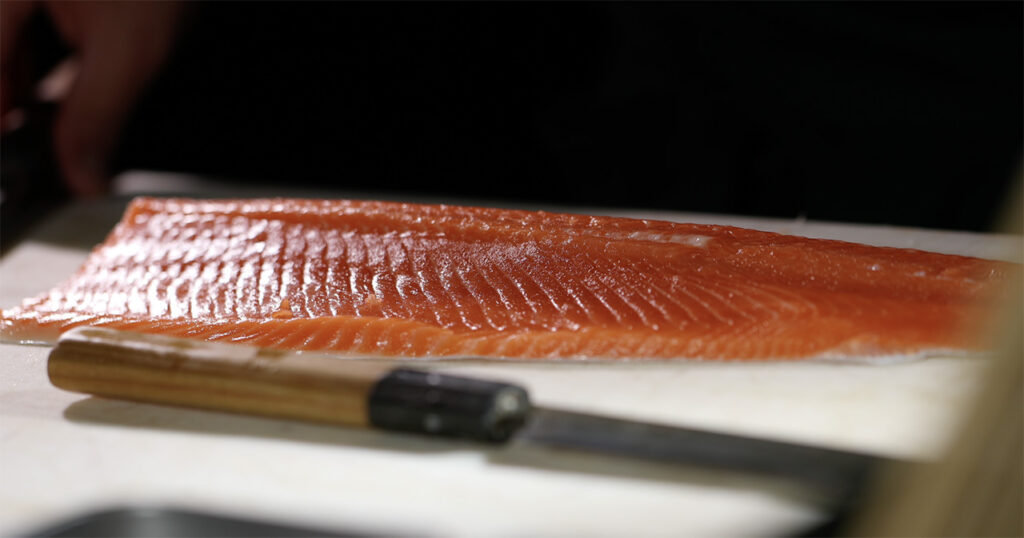
3 min read That fresh salmon fillet with skin was a little bigger than your appetite after all? Fortunately, the shelf…